

DEATH ROW
Most vessels on land will never again see the sea

Along with boatowners who are diligent about SPARRING WITH MOTHER NATURE and her amazing ability to deteriorate, there are dozens of derelict, abandoned vessels in this particular boatyard, one of thousands worldwide. If you wander about and contemplate the peeling coatings, rusted metal, sunken jackstands, and tattered coverings, you can feel the neglect, black mold covers interior surfaces and the exterior cracks and dries in penetrating sun, you know they will never again touch the water. We call it DEATH ROW.
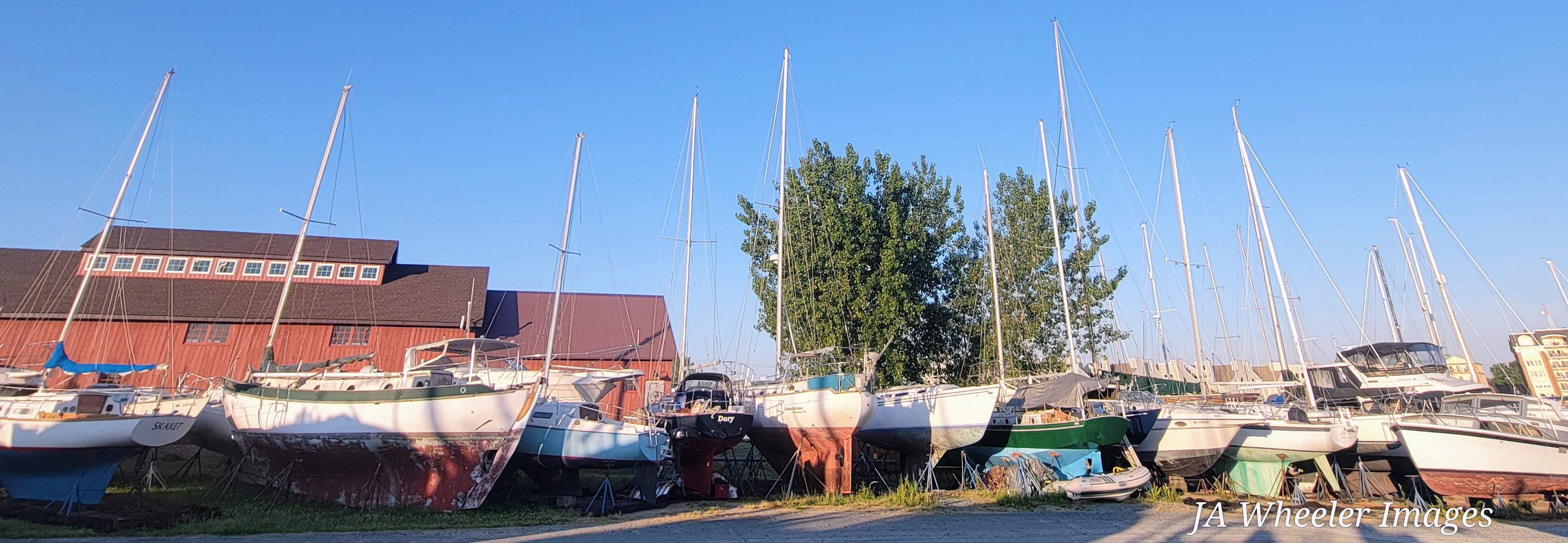


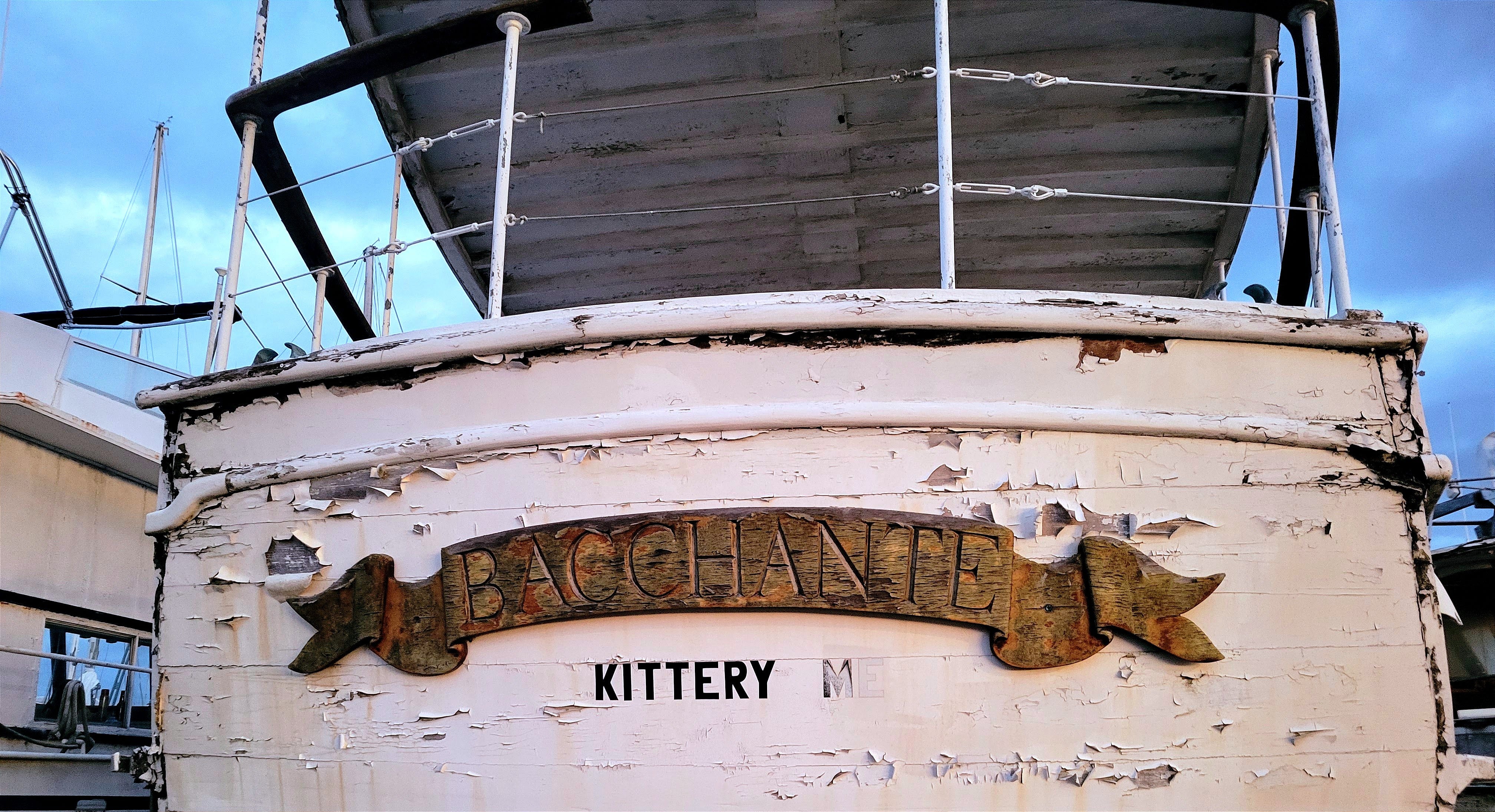
Here at Yacht Maintenance Company, Cambridge, Maryland, the most notable and most fascinating are in the row closest to the boatyard entrance, farthest from the water, appropriately enough. They sit perched on the highest point of land around, six now-decrepit vessels who, in their glory days, were glorious indeed. Places of celebration and joy, rest and recuperation, indulgence and intrigue, prestige and prosperity. Well-tended and well-loved, for certain. How, I ask myself, did all these souls end up here, on a long, winding river off the swampy eastern side of the Chesapeake Bay? A boat is internationally required to have both a name and a Hailing Port conspicuously posted to indicate where she originated, and if cleverly captured, what she personified. Sometimes you can then guess at a tiny part of her history, and the imagination can run quite wild. This gold-embossed, hand-carved name plate, though faded, catches the eye.


UNSUSTAINED DREAMS. Or shall I say UNSUSTAINABLE, or UNTENABLE? Except to a very small percentage of individuals who have the means and the desire. These vessels have a life span; we’ve talked about the biodegradability of wood, the rusting of iron, the insidious leaks that start anywhere and then catch sailors dangerously unaware, the corrosive nature of aluminum when it touches salt water. The volatility.
There are an assortment of reasons, of course, that these vessels were simply left high and dry. We never want to underestimate the pure power of money or how it is spent, but let’s face it, some probably come down to circumstance. The bigger your hobby the more of a commitment it becomes; financially, emotionally, personally, and time, oh, that bandit time. Time and Mother Nature are allies, hand-in-hand, skipping down the slippery-ass boat ramp of life encrusted with the ordinary and the unexpected, the soft and the slicing. Hard to defeat. Harder to estimate. The leaving behind happens on the water, too, and has caused a ruckus about anchoring and timing and living aboard in places that liveaboard Cruisers used to be welcome. One bad apple…
Society is far from perfect and we all make our choices. Some of those choices are most certainly what we leave behind.
In a perfect world, our piece of history named STEADFAST would be welcome and revered rather than devalued. I understand how disheartening it can be to keep investing in something that does not gain value except to oneself. I love my old wooden girl, but there is always something else that needs investment of time and resources. To possess something that other people cannot relate to, insurance companies won’t insure and fancy new marinas won’t let dock is a difficult thing indeed. If and when one does take the resisted path, it can be messy. I’ve wandered down a fun and shit-strewn trail for years and it made me better, frankly. Stronger, faster, smarter (like a superhero but NOT AT ALL like a superhero).
How you dispose of what you no longer want should not become someone else’s problem.
MIST OF AVALON, a unique blue-water wooden schooner from Nova Scotia, Canada, was a well-recognized tall ship at Canadian and US festivals as recently as 2018. She was undergoing refit during COVID and when the crew was finally allowed to leave, the story goes that they never returned. Her two massive steel spars were removed just a few weeks ago, the pile of lines and rigging amounting to almost a dump truck load in itself. There is a sadness that emanates now, from that hull. Occasionally, she sinks beneath the surface of her slip and, uncompensated, the boatyard crew pumps her out yet again, wary to spend the resources to dispose of her properly. Boats that are cleaned and become underwater reefs are most certainly a brilliant idea, but that, too, takes resources, permissions, and time.


Have you been forced to or chosen to leave something behind that became someone else’s burden? We probably all have. Let’s hope our dreams don’t end up on DEATH ROW. Until next week I plan to dream big regardless. — ~J
Substack keeps me up past my bedtime every Saturday night and it’s a mission that I love, to create something that you can enjoy, learn from and consider. If you think it’s share-able, please pass it along via traditional methods or the re-stack button. THX!
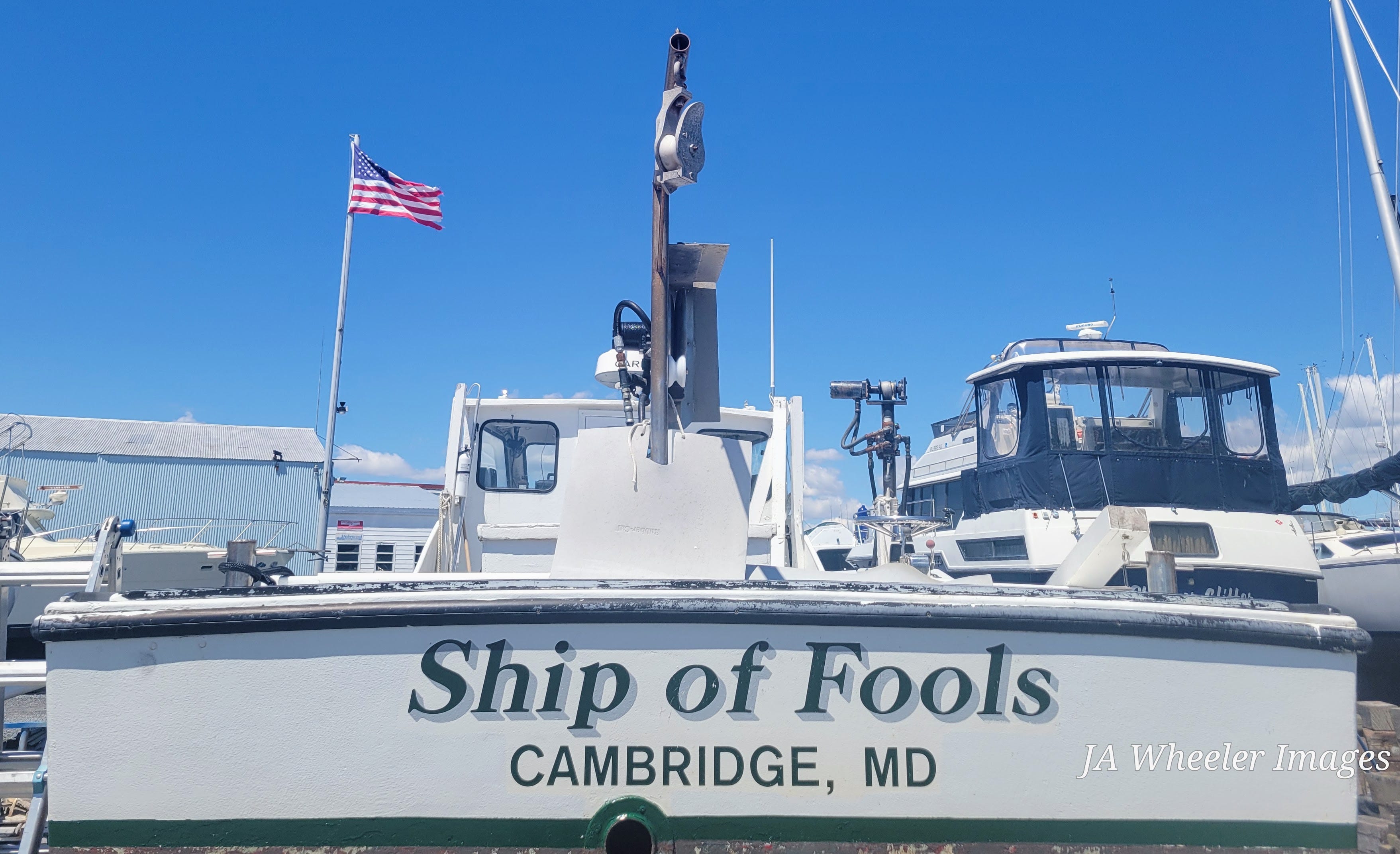
Perhaps we are secretly (or not) at the helm of something similar to this working girl?
REFERENCE:
* BAGLIETTO Yachts These are impressive~~ !
I love wandering the nether regions of traditional boatyards to find the free or cheap projects. I have rebuilt or restored a few boats along the way, and it amazes me that more people don't do it.
Imagine this; you find an old wooden 40' sailing yacht that is past it's best, but was once loved and treasured, and in good sailing order might be worth $60k, maybe twice that. You can have it for peanuts, and all you have to do is restore it and make it sound and sailing again.
So you buy Howard Chapelle's book (bible) 'Boatbuilding', about $60, and a decent set of tools, maybe $300 to start, and you buy the boat for a nominal sum - word of advice, always pay something, and sign a proper contract with the official owner.
So the first month with be chucking rubbish and cleaning, no skill required. Keep everything if you don't know what it is - you'll be surprised how much some of it costs!
Then go through the work you need to do, make a plan on one side of A4 (no more, or you'll spend a month writing plans!), and start work. Generally it will look something like this: First make the deck watertight, then fix the hull structure, then the hull covering, and then work through the systems like engine, electrics and plumbing.
If I make it seem easy, it's not. It is hard, sometimes almost impossible work and it will test you every day, especially your commitment and your abilities to learn. You will make mistakes, many, many mistakes, and each one will teach you something. You will learn more than you have ever learned before, mostly stuff that few people ever learn today, and even fewer can teach you.
BUT, and it is a big but, the process and the end result will not just change your life, it will change you too! It will change your confidence, your attitudes, your skills and your approach to every other aspect of your life. The biggest surprise is that it is the journey, not the destination that is most important - you started out building a boat to have a boat. You come to realise that the process is actually worth far more than any boat.
And for a couple of year's work, and for a small fraction of the monetary cost of going out and buying one, you could end up with a new home, either tied up in your local port, or anchored in the Mediterranean or Caribbean - your choice.
And even if you take a decade doing it as you juggle work and family, or even if you never finish it, it will still change your life. You'll understand yourself better, learn skills, and maybe even try again in a few years time, with more understanding and better skills.
Because old boats are one of life's better addictions!
I am living on my sailboat in a boatyard in Port Townsend, Washington. We are surrounded by boats in various stages of renovation, and, yes, a few on death row. Great post!